HW 7 Solutions posted / The rest of the year

– You may be interested to know that the solutions to homework 7 are available for viewing in the Documents tab. 

– I will hold office hours as usual tomorrow from 3-5

– Our last in-class test will be on the last day of class: Wednesday 4 December 2013; it will cover all the material we’ve done since the second test. I’ll post a more comprehensive list of subjects for you as the date approaches. Note that there are only two days of new material left. 
– Start thinking about the material you found most difficult throughout the year, so I can focus on that during the review class (Monday 2 December 2013). Send me emails about it and I’ll take note of what people have found most difficult.

So I’m listening to this artist called Druid Cloak and this track Ghost Iron comes up and reminds me of J Dilla which is weird because Druid Cloak is more of a future garage producer but anyway I took it as a sign to mention J Dilla to you, because J Dilla is dope. Donuts is one of the best instrumental albums of all time. That playlist isn’t mixed ideally for listening to the album, but it’s still good. Every time I have cause to say “working on it” I do it like the Dilla track Workinonit. 

Other tight, essential albums: Endtroducing….. by DJ Shadow and Music Has The Right to Children by Boards of Canada (both stone-cold classics), From Here We Go Sublime by The Field and Untrue  by Burial (not really similar albums, but they both came out in the same year and were a big reason I got into electronic music. Actually all five of these albums are quite different from one another.)
Did you know that SUNY students get free admission to the MoMA????? I just found out, and I’m super stoked. Gonna get my Magritte on this weekend! Y’all ain’t ready! 
  
Between that and the Met‘s policy of ‘recommended’ ticket prices (a.k.a., pay two dollars cos I’m poor (one of my friends only gives a penny)) life is good in our fair state for those of high taste and low income.

HW 8 posted / old hw + exam pickup

Hello all,

Your next assignment is now posted in the usual place. Also, I will be in my office tomorrow afternoon from around 2:30 to 5:15 if you want to stop by to pick up your homework 7, or any other material from earlier in the semester that you might want. I can answer quick questions, too, but it won’t be a full-fledged office hour.

If you only read one poem today, make it The Love Song of J. Alfred Prufrock, by T. S. Eliot.

If you only listen to one Solange Knowles-curated compilation album today, make it Saint Heron.
If you only look at one picture of cabbage today, make it this one:
  
That’s the logo for my fantasy team this year. I’m in first place.

HW 7 Corrections

Some vigilant students have pointed out a couple of errors in the homework 7 assignment, in problems 2(b) and 5. The statement to prove in problem 2(b) was incomplete, and there was a missing ‘x’ in the first term of the third equation in problem 5. The assignment has been updated with a corrected version

_________________________________________________________________________________
Today’s cheese is Mt. Tam, which is awfully tasty with a nutty raisin bread. It’s an American classic from Cowgirl Creamery in California.
  

HW 7 posted in full

It’s up, y’all. Due this coming Wednesday.

Celebrate by eating some Brillat-Savarin cheese, which is a very rich triple-cream named after one of my personal heroes, Jean-Anthelme Brillat-Savarin, who is responsible for the quotation “You are what you eat”, though what he said was actually “Tell me what you eat, and I will tell you what you are” (well, he wrote it, and in French it was “Dis-moi ce que tu manges, je te dirai ce que tu es”, but you get the idea). He also said “A dessert without cheese is like a beautiful woman with only one eye”. But seriously, you should eat cheese for dessert. Just make sure to take it out an hour or two before you eat it so it gets to room temperature. 
Here’s a handy guide to pronouncing the names of some famous mathematicians:
 

HW 7 / documents / treasure chests

Hello students,

I’ve added new lecture notes in the Documents tab. The homework 6 solutions are also available. I’ve posted part of homework 7 in the Assignments tab, in case you want to get started. Tonight I will update the file to include the rest of the assignment.
___________________________________________________________________________
If you’re scared of theoretical linear algebra, try sleeping with a night light. Just remember that running away from the problem won’t do any good. Even in its wildest moments, this subject is conquerable. 
This post brought to you by Jessie Ware, for some stupid reason. 
Locatelli pecorino romano cheese is the best cheese to put on pasta. Even better than parmigiano-reggiano. For real tho.
 

Update to HW 6 / Lecture notes posted

– I’ve updated the homework 6 assignment. Problem 8 will be part of next week’s assignment, and I’ve added a problem to this week’s assignment.

– I’ve also posted my notes for the past couple of lectures. They include material that will be covered on Wednesday. 
– Sorry I didn’t have the exams today; I forgot to get them from my office on Friday. You can come get yours tomorrow during office hours, and I’ll bring the rest to class on Wednesday.
_________________________________________________________________________
Époisses is a very stinky cheese. You can’t get real Époisses in the US because raw-milk cheese that’s aged less than two months is illegal. It’s a real bummer. The pasteurized version is okay, though.
 

Homework 6 / Exam 2 / hippos are dangerous

Querid@s estudiantes,

 I’ve posted your current homework assignment, quite logically, in the Assignments tab. It is due in class on Wednesday 6 November 2013. If you didn’t get your exam back today, you can stop by my office tomorrow after 7pm and get it. I will also bring them to class on Monday. If you have a problem with the grading, come see me during office hours on Tuesday. 
____________________________________________________________________________________________
 People give mad props to Nessun dorma, but my favorite part of Giacomo Puccini’s Turandot is probably the Act II Finale. The melody that comes in at about 0:21 in that video is one of my favorites of all time. Actually, the Act III finale might be better. I don’t know. 
 There were a few female-fronted bands that came out with tight EPs last year and whose full-lengths I was looking forward to this year — AlunaGeorge, Chvrches (well, they had a single (The Mother We Share) out last year; the Recover EP didn’t come out until March), Lorde, and Lucius. Well, they’ve all put out LPs over the past few months, and, to my delight, they’re all good! Obviously Lorde has blown up, so I’m not telling you anything you don’t know about her, and Chvrches have also garnered a bit of acclaim so maybe you’ve heard them. But the other two are less well-known I think, so check them out if you don’t know them. (I recently bought tickets to a Lucius concert, is what made me think of writing this.) 
Watch out for hippos, though:
  
Ay, caramba!

Exam 2

Hello class,

 As you know, your second exam will take place this coming Wednesday, 23 October 2013, in class. No graphing calculators will be allowed. The exam will cover material from:
Section 3.1: Determinants: Calculating them, using them to solve systems of linear equations, knowing their properties including special cases in which the determinant is easy to calculate, using them to find eigenvalues and eigenvectors, using Cramer’s rule.
Section 3.2: Solving systems of linear equations by elimination: Gaussian elimination, row echelon form, three possibilities for a system: (i) a unique solution (ii) infinitely many solutions (iii) no solution. Finding LU factorization of A aka LU decomposition of A and using it to solve Ax=b. Elimination by pivoting aka Gauss-Jordan elimination.
Section 3.3: Inverse of a matrix: Definition of an inverse, how to prove one matrix is the inverse of another (use the definition), what does it mean when the matrix has an inverse, computing the inverse, properties of the inverse. Eigenvalue decomposition of A aka diagonalization of A — what is it, how do you do it, why is it useful (study carefully pp. 204-207 of the text).
Section 3.4: Iteration: Determining dominant eigenvalue and corresponding eigenvalue by iteration (Example 2 on p. 216), solving Leontief model by iteration using properties of the geometric sum (Example 4 on p. 221, and the preceding analysis). Solution by iteration (p.223). Rewriting Ax=b to be in form x = Dx + c (sometimes c = b, sometimes not — see Example 5 (which we did in class)). Theorem 3 on p. 230.
 Everything I did in class that’s not in the textbook is also fair game. Specifically, you should know that theorem I presented on 9 October with a whole bunch of conditions that are equivalent. I neglected to name it when I presented it, but I will call it … the Fundamental Theorem of Invertible Matrices.
Come see me in office hours on Tuesday, and take advantage of the TAs’ hours as well.
For practice, you should review carefully all the examples I presented in class, redo the homework problems (without reference to your previous solutions, my posted solutions, or the textbook), and do similar problems in the textbook. Like these:
Section 3.1: 1, 3, 5, 7, 17, 20, 23, 27
Section 3.2: 3ef, 4ef, 5, 9c, 15 (also by pivoting), 22
Section 3.3: 10, 19, 21, 22, 25, 29, 31, 32, 33
Section 3.4: I haven’t yet decided how exactly I’m going to test your knowledge of this part, since a lot of the implementation of what’s going on here requires a computer, but study the examples closely. Exercises: 7, 8, 13b, 14
You don’t have to do all of them because that would take a while, probably. Just make sure you feel like you could solve them all.
__________________________________________________________________________
You should check out this album I’m listening to right now, I’m not going to say the name of the band because it’s got an obscenity in it but if you can get over that fact the album is called Slow Focus, it’s tight.
How great is Jaleel White’s face in this poster?
  

Clarifications / Exam 2

Yooooooooo,

Two things from class today:
1. The plural of wunderkind is, of course, wunderkinder. I realized as much right after class, (when I thought about the word kindergarten; I also remembered a sentence in a book I read long ago: “eine Schande für die Kinder” (or something like that), which a German woman says to her husband (in a pleasant way) when he is affectionate with her in front of their children. I don’t remember what the book was, though, and Google didn’t help, so if you happen to have the same weirdly specific memory and know whence that sentence comes, PLEASE let me know because it’s bugging me). Coincidentally, I was listening to the piano quintet in B minor by the German composer (and Beethoven chum) Ferdinand Ries when I realized wunderkinder was the right word. I suspect the Germanness of the piece helped me out quite a bit.
2. It’s “Rayleigh coefficient”, not “Raleigh”; I think I wrote the latter name on the board today. (Note: I put the previous sentence’s comma and semicolon outside the quotation marks, in the British style, because Lord Rayleigh was English (I also thinks it makes more sense to write that way)). Lord Rayleigh won the Nobel Prize in Physics, for discovering argon, but is perhaps better known for Rayleigh scattering, which explains why the sky is blue (it’s because it’s been listening to Miles Davis’s soundtrack to Ascenseur pour l’échafaud).
Perhaps more importantly for you, the second exam will be 23 October 2013 (one week from this Wednesday) in class. It will cover chapter 3. I will be more precise with respect to what exactly you need to know sometime after this Wednesday’s class. Don’t forget to do the homework that is due this Wednesday.
_________________________________________________________________________________
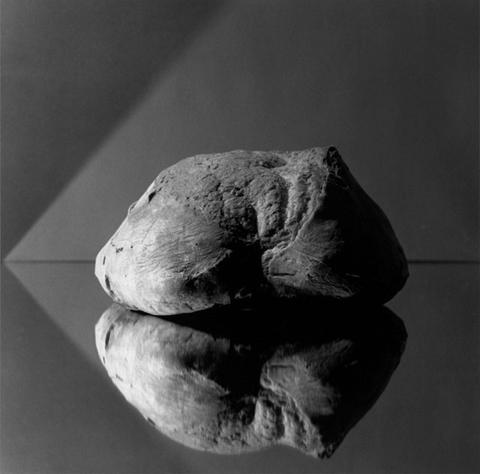
Robert Mapplethorpe was a hugely controversial photographer, but he also once took this lovely picture of bread:
  

Homework 5

Dear Everyone,

Your latest homework assignment is now posted in Tools tab. Just kidding, it’s in the Assignments tab. Gotcha. It’s also at the bottom of this email. Also, I will be in my office tomorrow afternoon (definitely 3-5pm, maybe earlier) if you want to come by and get your test, if you’ve not yet done. I will not be available for extra help during that time, though, I’m afraid. 
_______________________________
– William-Adolphe Bouguereau was a French painter active in the latter half of the 19th century. He was a strict traditionalist, painting in the Academic style throughout his career. Because of his tremendous ability in this domain, he became quite famous and respected; however, his lifetime saw the emergence of an artistic avant-garde, namely the Impressionists, who despised him and (what they saw as) the staid culture he represented. His Classical realism fell out of favor after his death in 1905, leading to a decline in prestige for his works, but renewed interest in representational painting has brought him the respect of the artistic community yet again, and his place in museums around the world is fairly secure. I find his career fascinating to think about: you’ve probably never heard of him, but you certainly know van Gogh and Monet. Why? Because those latter were not just brilliant painters, they were revolutionary geniuses. Being extraordinary at something (Bouguereau could really paint like a mofo) does not guarantee you membership in the G.O.A.T. club. At the same time, traditionalism was just his sensibility. Would he have been betraying himself if he had adapted stylistic advancements in whose merit he didn’t truly believe? Here’s one of his paintings that I think is really beautiful. I’ve seen it at the Met, though it’s not always on display.
wab  
– Beethoven’s Piano Concert No. 5 in E flat major (the Emperor Concerto), was the composer’s final piano concerto, and, like most of Beethoven’s work, it’s extraordinary. To me, the main theme of the first movement sounds like the first verse of Young the Giant’s “My Body“. Thoughts?
HOMEWORK 5:
Section 3.3: 2(a), (c), (e); 7(a), (c), (f); 8(a), (c), (f); 18; 20; 24; 28; 35(a)

Section 3.4: 6(a), (b) [make sure you understand all of Example 4]; 9, 13(a)
Extra credit:
Section 3.3: 35(b) 
Section 3.4: 7(a) (you have to use a computer to calculate powers of a matrix, MATLAB is available on some computers around campus and I think Mathematica, Maple, and MATLAB are available for free through Stony Brook here: http://it.stonybrook.edu/software/catalog. Knowing how to use any or all of them will be extremely useful in your academic career and beyond.  Helps with the ladies, too. And dudes!